
We Implemented ERPNext for a Quarry in Kerala — Here’s What Happened in 90 Days
We Implemented ERPNext for a Quarry in Kerala — Here’s What Happened in 90 Days
 admin
admin
A Kerala-based Sand and Gravel Quarry was running on Spreadsheets, Gut Feel, and Delayed WhatsApp Reports. Three months after going live on ERPNext, their operations looked almost Unrecognisable.
The Client: A Mid-Sized Quarry with Growing Pains
Our client runs a sand and gravel quarry in Kerala — a moderately sized operation with multiple extraction zones, two weigh bridges, and a small fleet of tippers and loaders. They had been in business for over a decade and had reached a point where the old way of managing things was starting to crack.
Revenue was growing. But so was the confusion.
They came to us not because they wanted new software. They came because the owner could no longer trust the numbers on his desk.
What was broken before we started
When we did the initial assessment, three interconnected problems were causing the most damage:
- No real-time production visibility. Daily output data was logged manually by site supervisors, compiled into Excel sheets, and sent to the owner each evening via WhatsApp. By the time anyone saw a number, it was 10–12 hours old — and often incomplete. If a loader had a breakdown at 2 PM, the office didn’t know until the shift report came in at 6.
- Chronic stock discrepancies. Physical stock at the yard and what was on paper rarely matched. Weighbridge entries were sometimes logged twice, sometimes skipped. Material issued to one site occasionally appeared in another’s records. Reconciliation was done monthly — and it was painful every time.
- Slow, error-prone billing. Invoices were raised manually from handwritten weigh slips. The billing team was always behind. Disputes with transporters over quantities were common. A few large customers had started asking for faster, itemised documentation — and the team couldn’t reliably provide it.
What this was actually costing them.Beyond the operational headaches, delayed invoicing was stretching receivables. Stock discrepancies were creating write-offs that were difficult to explain or audit. And the owner was spending hours each week chasing reports instead of running the business.
How we approached the implementation
We’ve implemented ERPNext for quarrying operations before, but every site is different. The first thing we did was spend time on-site — understanding the actual flow of material from extraction to dispatch, how the weigh bridges worked, and where the handoffs between teams were breaking down.
The 90-day rollout happened in three phases:
Days 1–30
Days 31–60
Days 61–90
One thing worth being honest about: the first weigh bridge integration took longer than we expected. The existing hardware used a legacy data format that needed a custom connector. It added about 8 days to Phase 1. We flagged it early and adjusted the timeline without affecting the overall go-live date.
What changed in 90 days
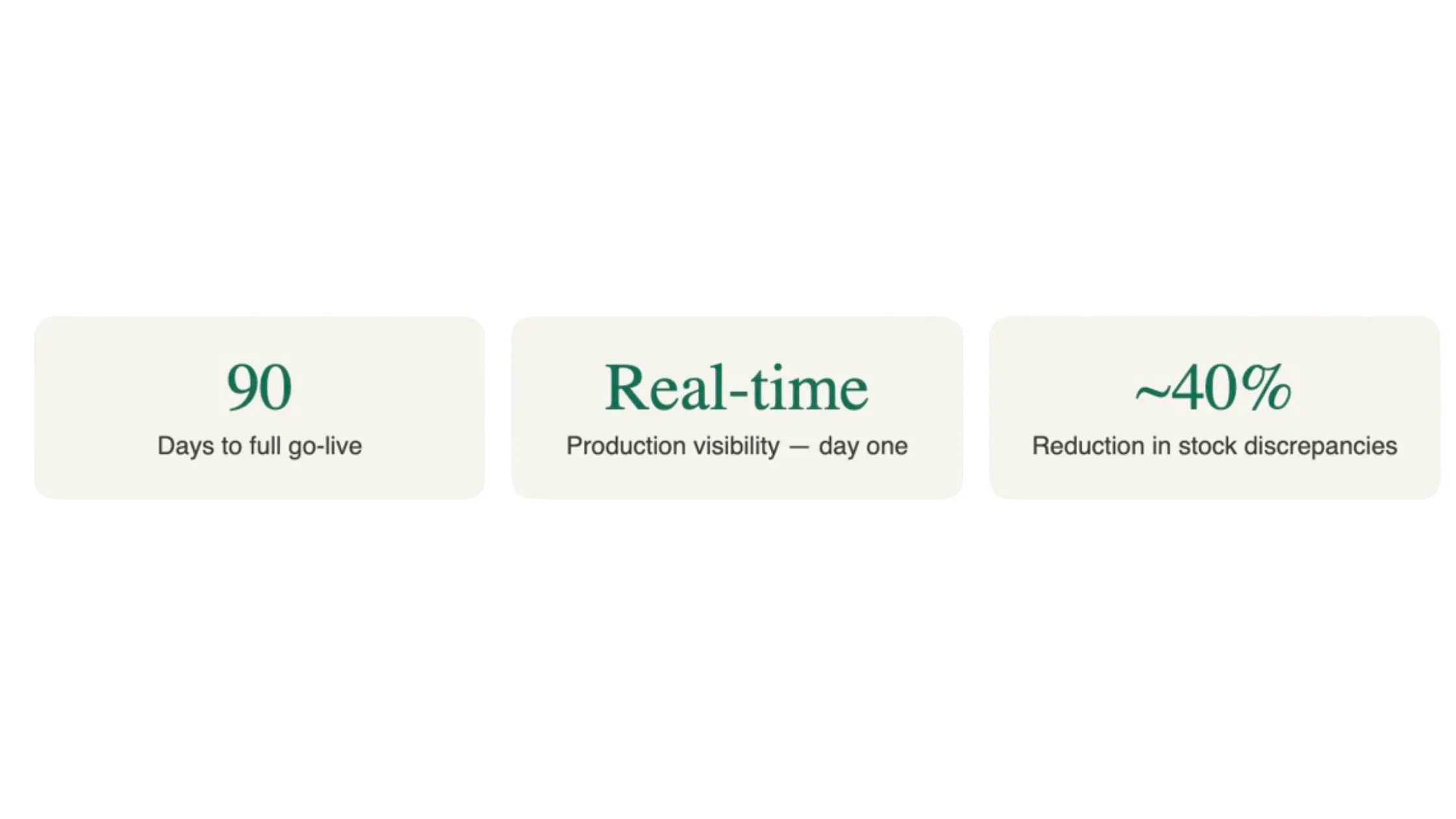
Real-time production visibility from day one of go-live. The owner could now see daily output by zone, by material type, and by shift — from his phone. No more waiting for WhatsApp reports. When a loader went idle mid-morning, it showed up in the dashboard before lunch.
Stock discrepancies dropped by approximately 40%. By standardising weigh bridge entries and linking every dispatch to a delivery note, the main sources of duplication and omission were eliminated. The first monthly stock reconciliation after go-live took half the time of the previous one — and had fewer exceptions to investigate.
Invoicing turnaround went from 3–5 days to same day. Once a delivery note was approved, an invoice could be generated in minutes. The billing backlog cleared within three weeks. Two of the quarry’s largest customers noticed and commented on it unprompted.
“Before, I was always one step behind. I’d ask how much we dispatched today and nobody could give me a straight answer until evening. Now I check the dashboard in the morning and I know exactly where we are.”
— Operations Head
Is this relevant to your quarry?
If you’re running a quarrying or mining operation in India and you recognise any of these problems — stock that doesn’t reconcile, invoicing that lags behind dispatch, production data that arrives too late to act on — this is a solvable problem. It’s not about having the right software. It’s about implementing it the right way for your specific operation.
We’ve done this across sand, gravel, granite, and blue metal quarries. The details differ. The underlying problems are usually the same.
Book a free 30-minute discovery call. We’ll look at your current setup and tell you honestly whether ERPNext is the right fit — and what implementation would realistically look like for your operation.
Alternatively, you can also follow us on LinkedIn, or YouTube, for interesting updates on digital transformation for your business.